
Event Design Trends for 2027: Creating More Meaningful Experiences


The details people remember from an event are not always the ones that took the most planning.
Sometimes it is the conversation that happened away from the main stage. A thoughtfully designed welcome area. A familiar company name illuminated across the room. Or a photograph that captures the occasion and the people who made it matter.
As event planners look toward 2027, these moments are becoming an important part of how experiences are designed.
Across corporate gatherings, conferences, nonprofit galas and milestone celebrations, the conversation is shifting beyond how an event looks to how it feels, functions and brings people together.
Recent industry insights from Cvent's article on how events are changing in 2026 highlight three developments worth carrying into the next planning season: attendee-led personalization, smaller curated gatherings and spaces designed with purpose.
For event professionals planning what comes next, these ideas offer a useful starting point. And for those of us who work with the visual details of an event, they reinforce something important: meaningful design is not necessarily about adding more. It is about making thoughtful choices.
1. More Personal Experiences, Less One-Size-Fits-All Design
A room full of guests does not mean everyone is experiencing an event in the same way.
Some attendees arrive ready to network. Others are there to celebrate a colleague, learn something new or spend time with people they rarely see in person. A well-designed event makes room for those different experiences.
Cvent identifies attendee-led personalization as a significant direction in event planning. Rather than relying entirely on a structured program, organizers are creating opportunities for guests to engage in ways that feel relevant to them.
From a design perspective, that means thinking beyond the main stage.
A comfortable gathering area, a welcoming entrance and an inviting place to take photographs can each contribute something different to the guest experience.
Where illuminated displays fit
A company name, event title or meaningful word can help establish the identity of an event without requiring every guest to participate in the same activity.
For example, illuminated lettering positioned near a reception area can make the event recognizable as guests arrive. A thoughtfully styled photo setting can give colleagues an opportunity to capture a moment together. A display placed near a recognition area can reinforce the reason everyone has gathered.
The goal is not to fill every available space with décor. It is to identify the places where a visual statement serves a purpose.
A question worth asking: What do we want guests to notice, experience or remember as they move through the event?
That answer can guide design decisions more effectively than choosing decorative elements in isolation.

2. Smaller Gatherings Still Deserve Thoughtful Design
Not every meaningful event takes place in a ballroom with hundreds of attendees.
Leadership gatherings, private client events, employee recognition celebrations and smaller nonprofit functions can create opportunities for more personal interaction.
In its discussion of curated micro-events, Cvent points to growing interest in gatherings designed around conversation and connection rather than attendance numbers alone.
This does not mean larger events are becoming less important. It means planners are thinking more carefully about matching the environment to the purpose of the gathering.
Making a statement without overwhelming the space
For a smaller event, every design element has a more noticeable role.
An illuminated word representing the occasion, a milestone number or a carefully positioned branded display may provide a focal point without competing with the room's other details.
The surrounding setting matters just as much. Seating arrangements, lighting, floral design and the architecture of the venue all influence whether a display feels like a natural part of the experience.
A useful design approach is to begin with one question:
What is the single most important message this gathering should communicate?
For an anniversary celebration, it may be the milestone itself. For a recognition event, it may be appreciation. For a company gathering, it may be the name or identity that brings everyone together.
Once that message is clear, the visual decisions become more intentional.

3. Event Spaces Are Being Designed Around Their Purpose
A beautiful venue is a wonderful starting point. But appearance alone does not determine whether a space works well for an event.
Guests need to understand where to go, how different areas connect and what parts of the environment invite them to participate.
Cvent's discussion of purposeful spaces reflects this broader consideration of function, movement and interaction.
For planners, this creates an opportunity to look at décor as part of the overall event layout rather than a collection of finishing touches.
Give every statement piece a reason to be there
Before selecting a location for illuminated lettering or another prominent display, consider how guests will actually use the space.
An entrance display can help establish the occasion when attendees arrive.
A display near the stage can visually connect a presentation or recognition program to the event's theme.
A photo setting near a reception or networking area can offer a natural place for guests to gather.
Each location serves a different purpose, even when the same type of décor is used.
Visibility, sightlines, available space, surrounding lighting and the venue's requirements are all worth considering before finalizing placement.
The strongest design choices work with the setting rather than asking the room to work around them.

4. Branded Event Design Can Feel Personal
Corporate event design often needs to do two things well: communicate a recognizable brand and create an atmosphere where people feel welcome.
Those goals do not have to compete.
A company's name, an event theme or a milestone can be incorporated into the environment in a way that feels celebratory rather than purely promotional.
Consider the difference between branding that appears only on a presentation screen and branding that becomes part of the event itself.
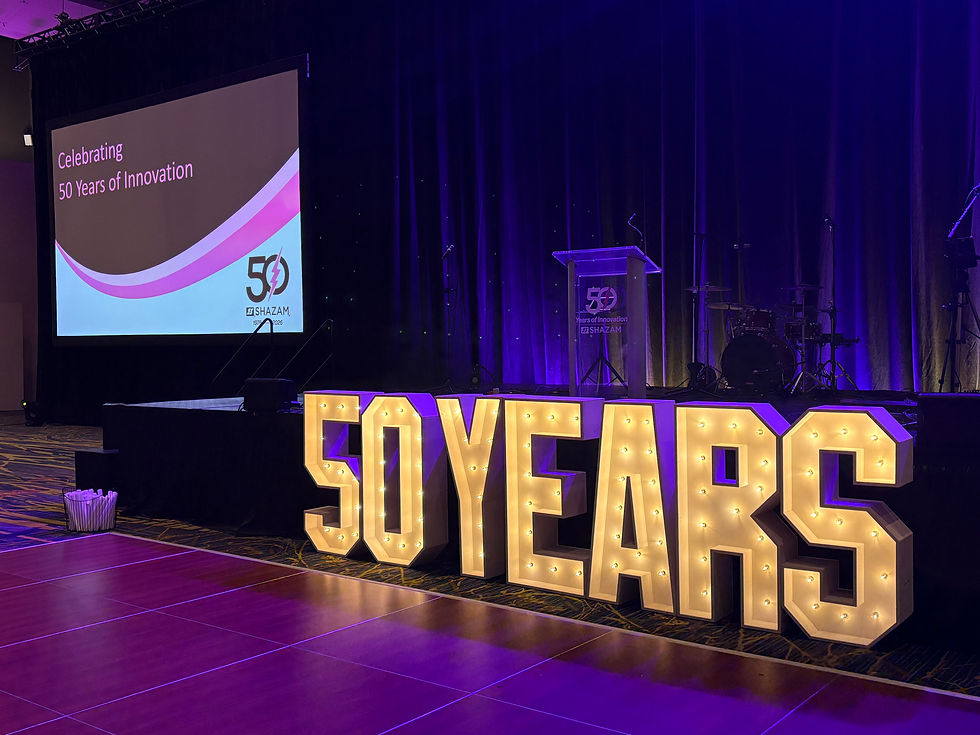
A dimensional, illuminated display can bring a name or message into the physical setting. Guests can see it as they gather, and it can become part of the photographs taken throughout the occasion.
That is particularly relevant for company anniversaries, employee recognition events, awards programs and brand celebrations.

Think beyond the event day
An event may last only an evening, but its photographs can have a much longer life.
Corporate teams may use event photography in internal communications, recruitment materials or future event promotion when they have the appropriate rights and permissions.
For nonprofits, photographs can help document a celebration, recognize supporters or communicate the atmosphere of a gathering.
A well-considered event display can provide visual context for those images by making the occasion recognizable.
This is one reason we encourage planners to think about the photographic setting before the event begins.
Where will people naturally gather? What will appear behind them? Will the event name or message be visible without distracting from the people in the photograph?
These are small decisions that can make event imagery more useful and cohesive.
5. Lighting Is Part of the Experience, Not Just the Atmosphere
Lighting influences how a room is experienced.
It can draw attention toward a central feature, introduce warmth to a large venue or bring definition to a particular gathering area.
Illuminated marquee letters offer one way to incorporate light and messaging into a single design element.
The impact depends on the setting.
Against a darker background, the illuminated lettering may become a prominent visual feature. In a bright reception area, it may work as part of a layered design with florals, furniture or architectural details.
Neither approach is necessarily better. The right choice depends on what the event is trying to achieve.
Coordinate the details early
It helps to consider illuminated décor alongside the broader design plan instead of waiting until the room layout is complete.
Event planners and venue teams can review the intended placement, available space, nearby elements, photography angles and installation requirements before the event.
For larger corporate productions, it is also helpful to consider how a display will relate visually to the stage, audiovisual equipment and other branded materials.
Thoughtful coordination creates a more cohesive result than choosing each element separately.
6. The Most Lasting Event Design Trend Is Intentionality
Trends will continue to change. New formats, venues and technologies will influence how people gather.
But the ideas highlighted in Cvent's 2026 research point toward a principle that feels especially relevant heading into 2027: Every part of an event should contribute to the experience.
For an event planner, that might mean creating more opportunities for guests to connect.
For a venue, it could mean helping organizers use a room in more flexible ways.
For a company or nonprofit, it may mean making the event's purpose visible through thoughtful branding and recognition.
And for decorative elements, it means knowing why something belongs in the space.
At Letter and Light Co., we see illuminated lettering as one part of that larger design conversation. The right words, names or numbers can help define an occasion, contribute to the setting and become part of the images people keep.
The letters themselves are only part of the story.
What matters is the occasion they represent.
Planning an Event in 2027? Start With These Questions.
Before finalizing your event design, consider:
What is the purpose of this gathering? Is it recognition, connection, celebration, education or a combination?
Where will guests naturally spend their time? Think about arrival, networking, dining and photography.
What message deserves a visual presence? A company name, anniversary, event theme or meaningful word may help tell the story.
How will the design work with the venue? Consider layout, scale, visibility, lighting and surrounding details.
What photographs will be useful afterward? Plan for images that capture people and provide context for the occasion.
These questions can help turn a collection of individual details into an environment that feels cohesive and considered.
Thoughtful Details for the Events That Matter
Whether you are planning a corporate celebration, nonprofit gala, conference, recognition program or private gathering, the most effective visual details begin with an understanding of the occasion.
Letter and Light Co. provides premium marquee letter and lighted décor rentals designed to bring meaningful messages into the event setting.
From an illuminated event name to a company milestone or personalized statement, we believe the right display should feel connected to the people and purpose behind it.
Planning an event for 2027? Tell us what you're planning. We'd love to hear about the occasion and the setting you have in mind.
Industry perspective
This article draws on insights from Prajwal Nakoti's March 18, 2026, article for Cvent, How Events Are Changing in 2026: Personalization, Micro-Events, and Purposeful Spaces. Cvent's research provides context on evolving event-planning priorities. The design considerations discussed here are Letter and Light Co.'s editorial recommendations.


Comments